988 is the Suicide and Crisis Lifeline in Canada and the US: free, confidential, any time. Tiller isn’t therapy or crisis care. If you tell the coach something heavy, it stops, stays with you, and points you to 988 and the Crisis Text Line.
Small things you can do on a bad day.
Real app screens, shown with a sample member.
Tap any screen to see it full size.
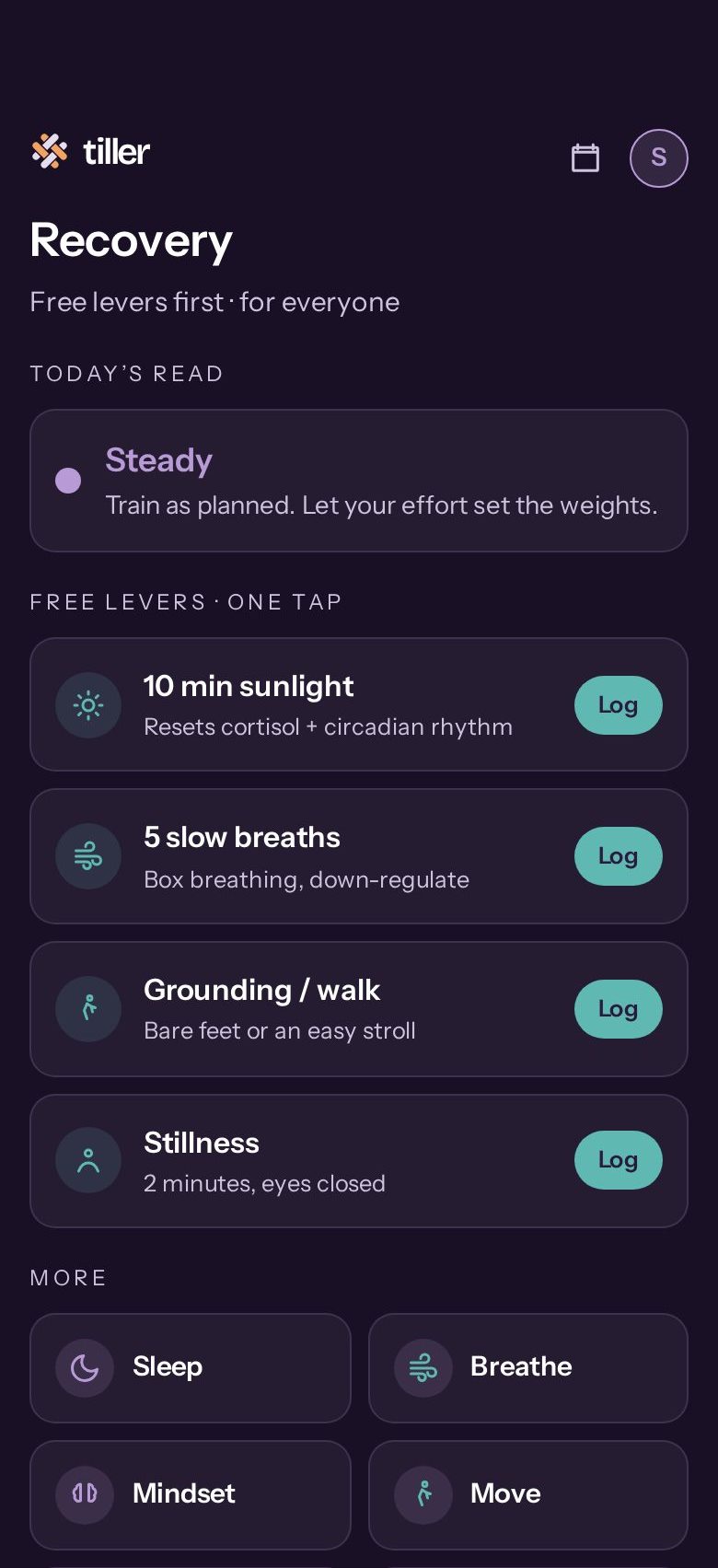
How are you, really? One tap.
Great, good, okay, low or rough. Then the small things that help: sleep, sunlight, a walk, a few slow breaths, a few minutes of stillness. Tick off what you managed. Nothing is required.
- Mood logged in a tap, any time of day
- Eight small levers, free and doable
- A daily affirmation, if you like that sort of thing
See what your low days have in common.
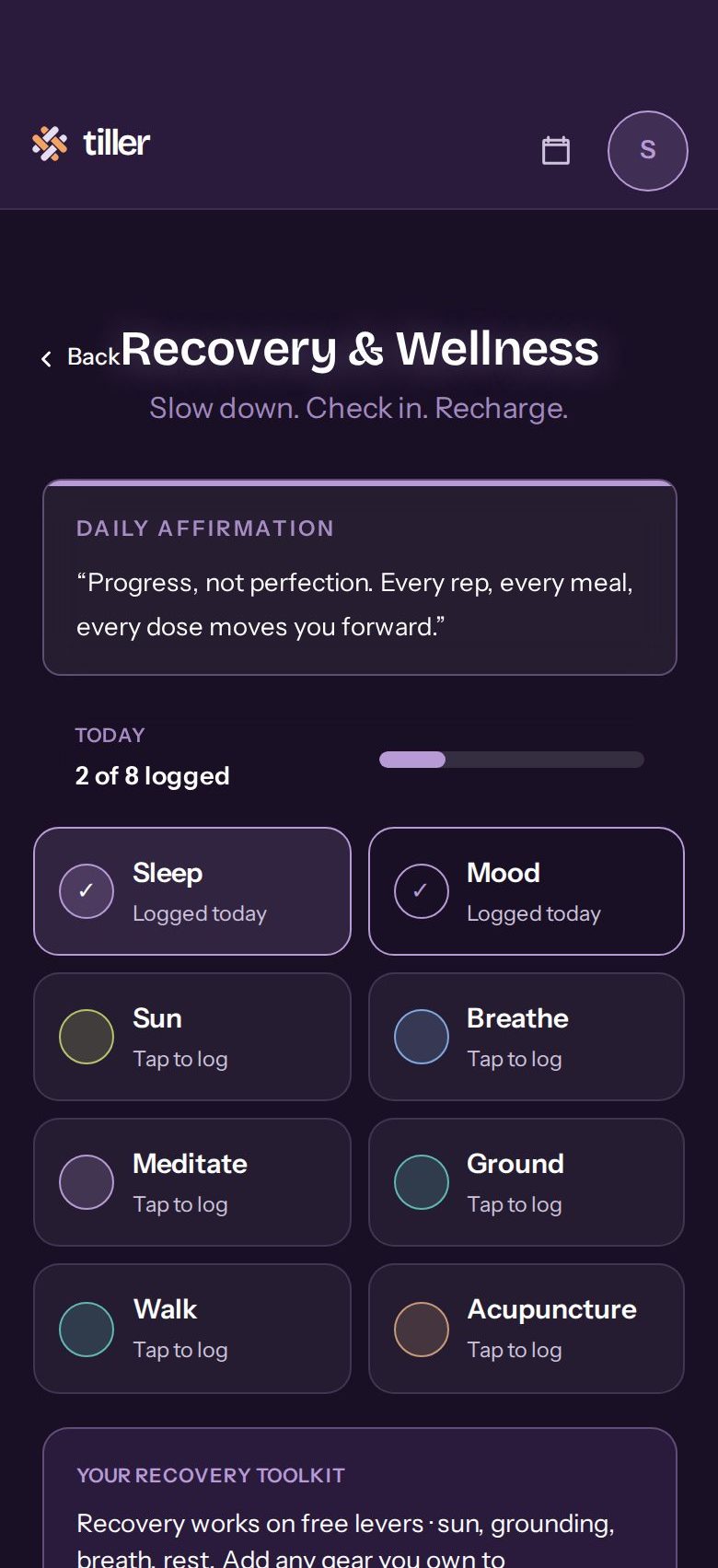
The weekly report reads your mood alongside your sleep, training and food, and shows you what lined up. Often it’s smaller and more fixable than it feels.
- Mood next to sleep, food and movement, week by week
- One or two changes to try, not a program
- What’s worth raising with your doctor
Two minutes to come down a notch.
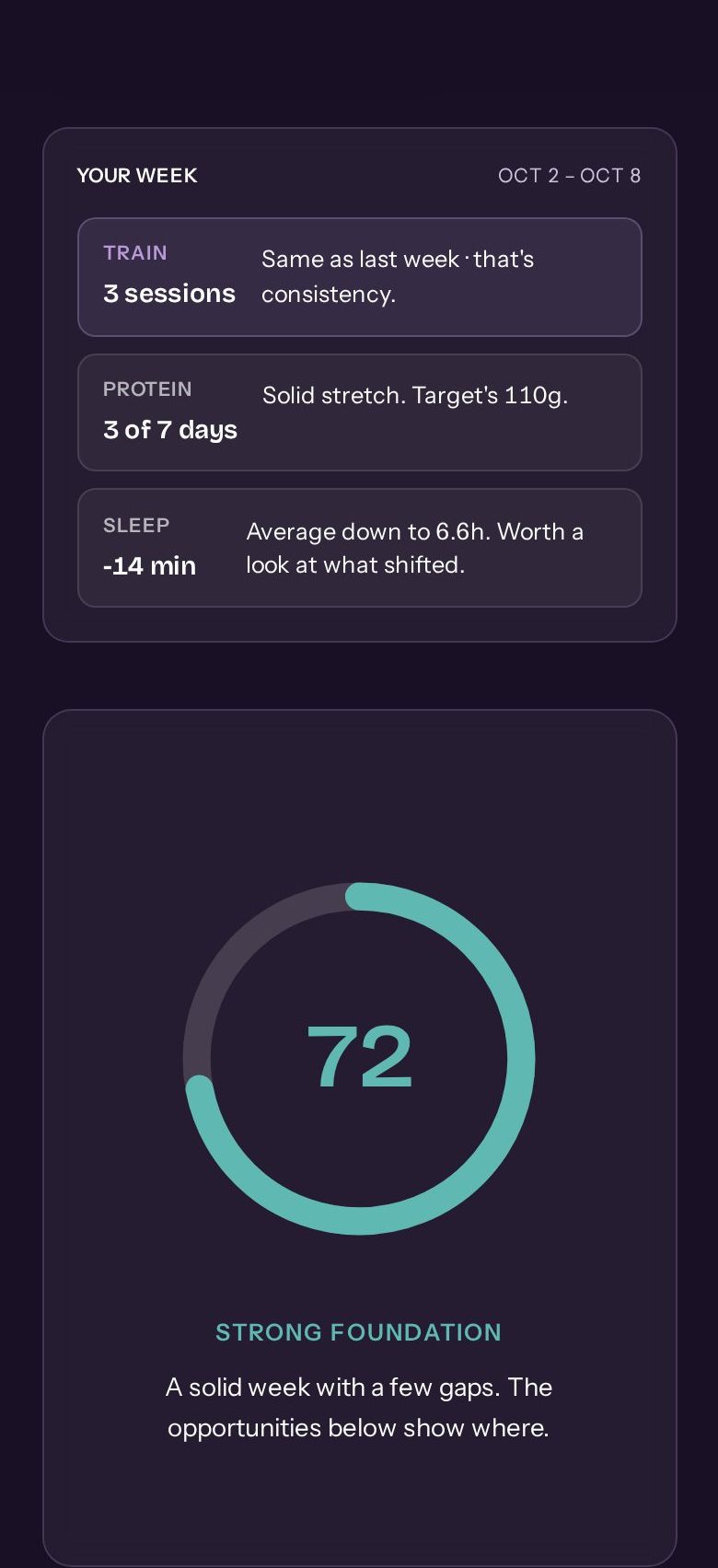
Pick a breathing pattern and a length, follow along, and log it in a tap. Box breathing, 4-7-8, coherent breathing, the physiological sigh and more.
- Short sessions that fit a bad day
- Minutes and streaks tracked
- Logged alongside your mood and sleep
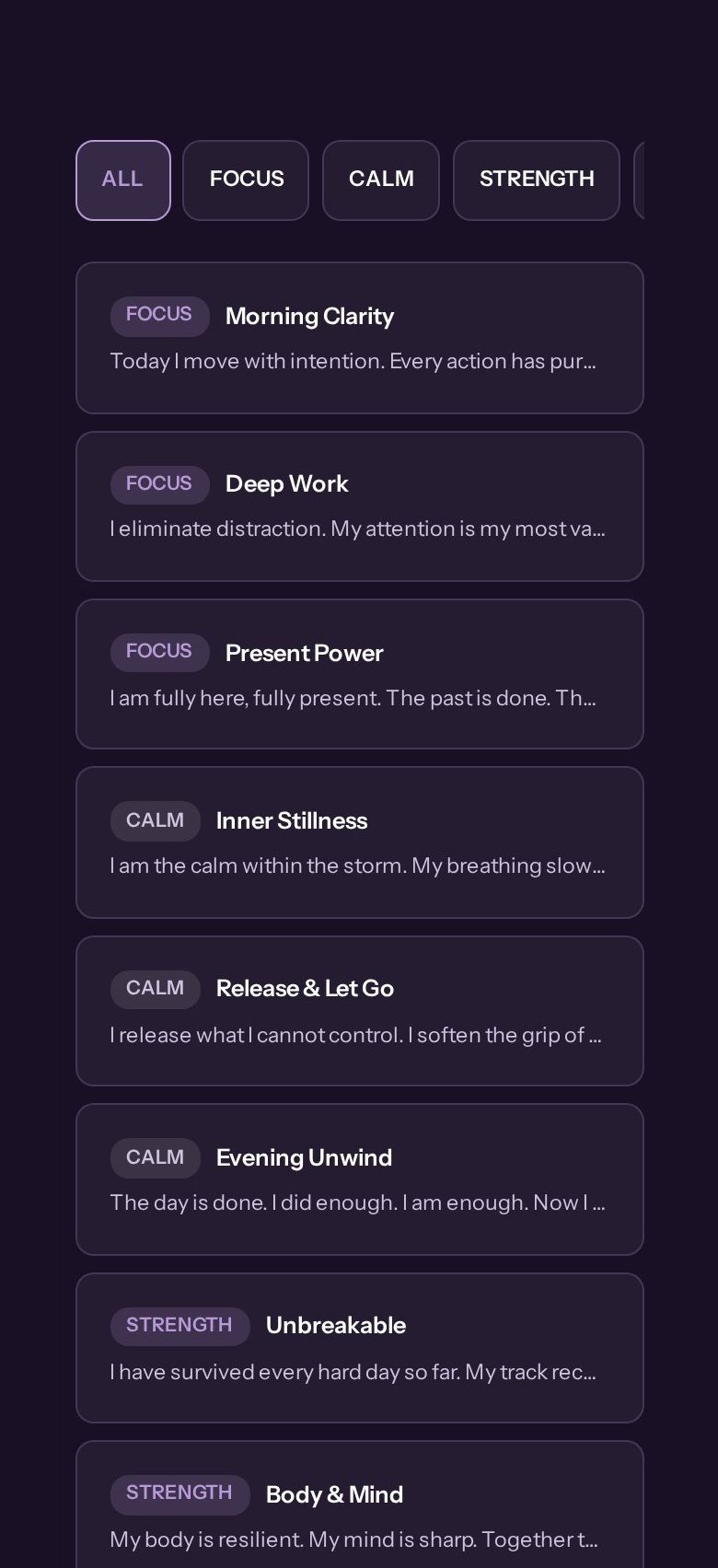
Something to hold onto.
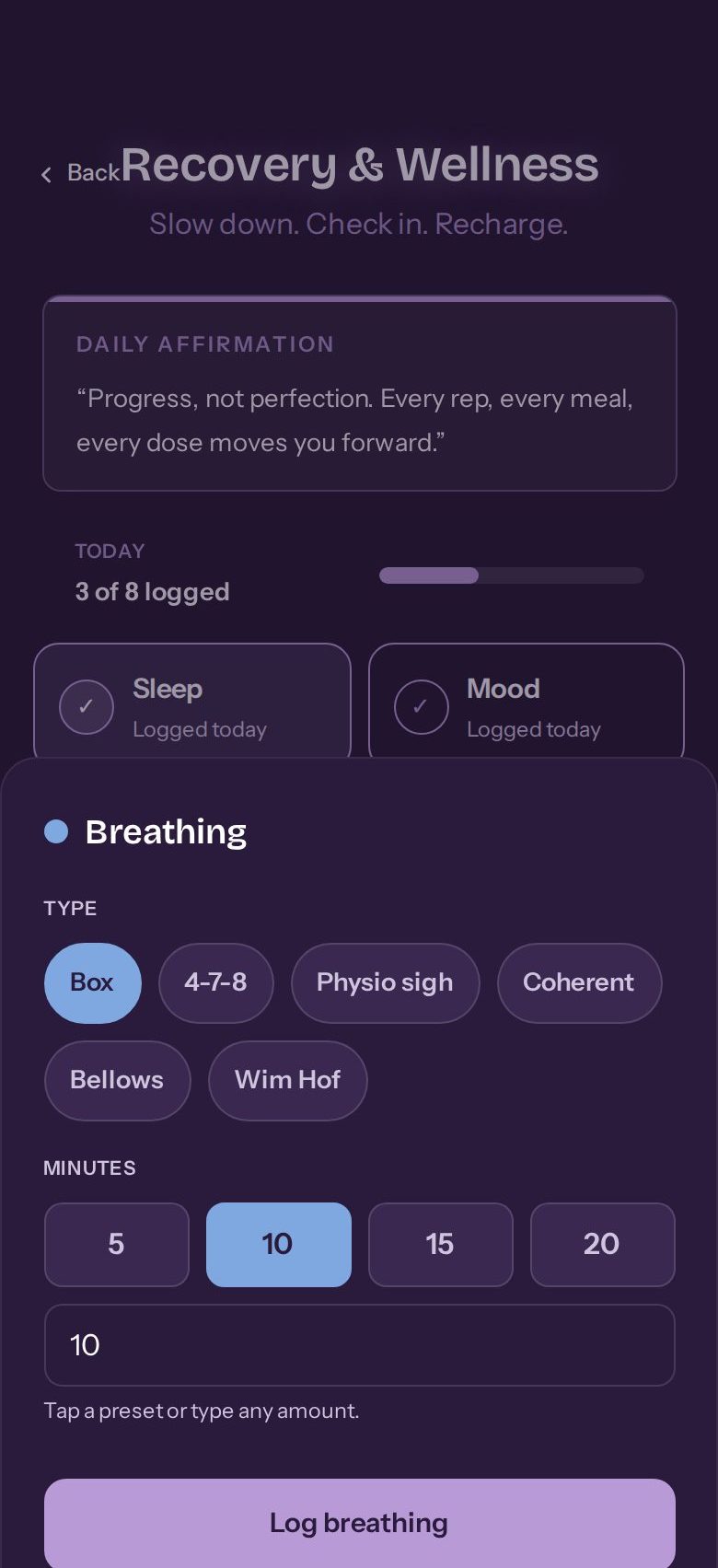
A library of short affirmations sorted by what you need: focus, calm or strength. One shows up each day; the rest are there when you want them.
- Sorted by focus, calm and strength
- A daily line on your Recovery screen
- Read one, or none. They’re there when you want them
When your head is loud.
Write it out
A private journal. When you want, ask for a gentle reflection on your last week of entries: what keeps coming up, and what seems to help.
Get outside
Ten minutes of sunlight, a walk, or a few minutes of grounding, each logged in a tap. Free levers first, for everyone.
Be still
A stillness timer for two quiet minutes, eyes closed. Nothing to track but the time.
A hard week has a shape.
Tiller lines up your mood with the rest of your days, so the next step is small enough to do.
A sample member. Tiller points out patterns in your own records. It does not diagnose.
- MoodLow three days running.
- SleepUnder six hours on each night before.
- FoodLunch skipped on two of the three days.
- MovementNo walks since Monday.
- TillerA walk after lunch and a short breathing session before bed. Small enough to do on a bad day.
Before you start.
Is Tiller therapy?
No. Tiller helps you notice how mood moves with sleep, training and food, and plan around a hard week. It isn’t therapy or treatment. If you’re struggling, talk to your doctor.
Can it help with depression or anxiety?
It can help you see patterns and take small steps, and it can help you prepare for an appointment. It doesn’t treat depression or anxiety, and it won’t pretend to.
What happens if I tell the coach I’m not okay?
It stops asking you to log anything and stays with you. If you mention thoughts of harming yourself, it gives you 988 and the Crisis Text Line straight away, and keeps talking with you.
Do I have to log every day?
No. Log what you can, when you can. Tiller works with whatever you give it.
Start with ten days free.
The full app from day one, long enough for a week of logs and your first insights report. No charge for ten days, then the plan you choose. Cancel anytime in Settings.
Every part of the app is included: training, food, sleep, mood, labs, the coach and the weekly report. Works in your phone’s browser and installs to your home screen.